What is Contrapposto? Drawing Tips for Dynamic Poses
Before we get into the technique, here's the short version:
Contrapposto is a figure drawing technique where the body's weight shifts onto one leg, causing the hips and shoulders to tilt in opposite directions and creating a natural S-curve through the torso. The result is a pose that looks alive and in motion rather than stiff and symmetrical — and it is one of the most important concepts in figure drawing for anyone working in comic, character, or marker art.
Hey marker slingers, hello and welcome.
This week I wanted to skip the character spotlight and get into some technique. Specifically, I want to talk about one of the most useful concepts in figure drawing that most beginners either skip over or never hear about at all.
Understanding the contrapposto pose
The contrapposto pose is the foundation of natural figure drawing. Before getting into mechanics, here is the short version: it is any stance where the weight, hips, and shoulders shift in opposition, so the figure looks like it is in motion rather than frozen in place.
Contrapposto (also spelled contraposto, contrapasto, controposto, contrapossto, contrappostos, contraposta, or contra posto — all the same concept) is an Italian visual arts term that means "counter pose." The Italians get the credit for naming it, but the concept actually goes back further to ancient Greek sculptors who were the first in Western art to show the human body in a relaxed, natural stance rather than a stiff, symmetrical one. It was one of the earliest ways artists expressed psychological life through a figure's posture.
Da Vinci, Donatello, and Michelangelo all used and expanded on the idea during the Renaissance. The most famous example is Michelangelo's statue of David.
How does it work?
Here is the core mechanic. When a figure shifts their full weight onto one leg, the pelvis tilts. The raised hip on the weight-bearing side causes the opposite shoulder to drop slightly to compensate, and the torso takes on a subtle S-curve between the two. The result looks like the figure is in the middle of doing something, rather than standing there waiting to be drawn.
Start here: plant the weight on one foot. Let the other leg relax, knee slightly bent. Now let the hips tilt. Let the shoulders respond in the opposite direction. That tension between the upper and lower body is contrapposto.
For comic and character art specifically, this is what separates a figure that feels powerful from one that looks like a cardboard cutout. Characters like Black Panther, Spider-Man mid-crouch, or a hip-hop artist mid-performance all carry natural weight because the body is never perfectly symmetrical at rest.
Why it matters for marker art
When you are building a figure in marker without relying on an ink outline for structure, the pose has to carry the drawing before color even enters the picture. A stiff, static pose becomes twice as obvious when you start laying in values. Contrapposto gives the sketch a built-in sense of life that your colors then reinforce rather than try to rescue.
Pair this with a solid understanding of anatomy and you will not need gimmicks to make your figures feel real. The pose itself will do the work.
Now go shake off those sad robot poses.

“If people knew how hard I worked to get my mastery, it wouldn’t seem so wonderful at all.”
Frequently Asked Questions About Contrapposto
What is contrapposto?
Contrapposto is a pose where a figure shifts its weight onto one leg, causing the hips and shoulders to angle in opposite directions. The resulting S-curve through the torso is what makes a figure look natural and alive rather than stiff and static.
What does contrapposto mean?
The word contrapposto is Italian for "counter pose." It describes the opposition between the upper and lower body when a figure's weight is unevenly distributed across both legs.
What is a contrapposto example?
The most famous example is Michelangelo's statue of David. The figure stands with weight on the right leg, causing the left hip to drop and the right shoulder to compensate — a textbook contrapposto stance that has been studied and referenced by artists for centuries.
What is contrapposto in art?
In art, contrapposto refers to any figure composition where the body's axis is asymmetrical. It was first developed by ancient Greek sculptors as a way to express naturalism and life in the human form, and was later expanded during the Italian Renaissance.
What is the difference between contrapposto and a symmetrical pose?
A symmetrical pose distributes weight equally across both legs, giving the figure a rigid, static appearance — what most beginners default to. Contrapposto shifts that weight to one side, introducing tension between the hips and shoulders that reads as movement and personality.
How do you draw a contrapposto pose?
Start by planting the full weight on one foot. Let the opposite knee relax and bend slightly. Allow the hip on the weight-bearing side to rise, and let the opposite shoulder drop to compensate. Sketch the S-curve through the spine first before adding any detail — the curve is the foundation everything else builds on.
Want to see Contrapposto in Action?
If you want to see contrapposto in action in finished marker art, my Tupac Shakur x Deadpool and Hip-hop x Comics Vol. 1 are good examples of how weight shift and S-curves translate from the sketchbook to a finished piece.
Both are available in the shop.
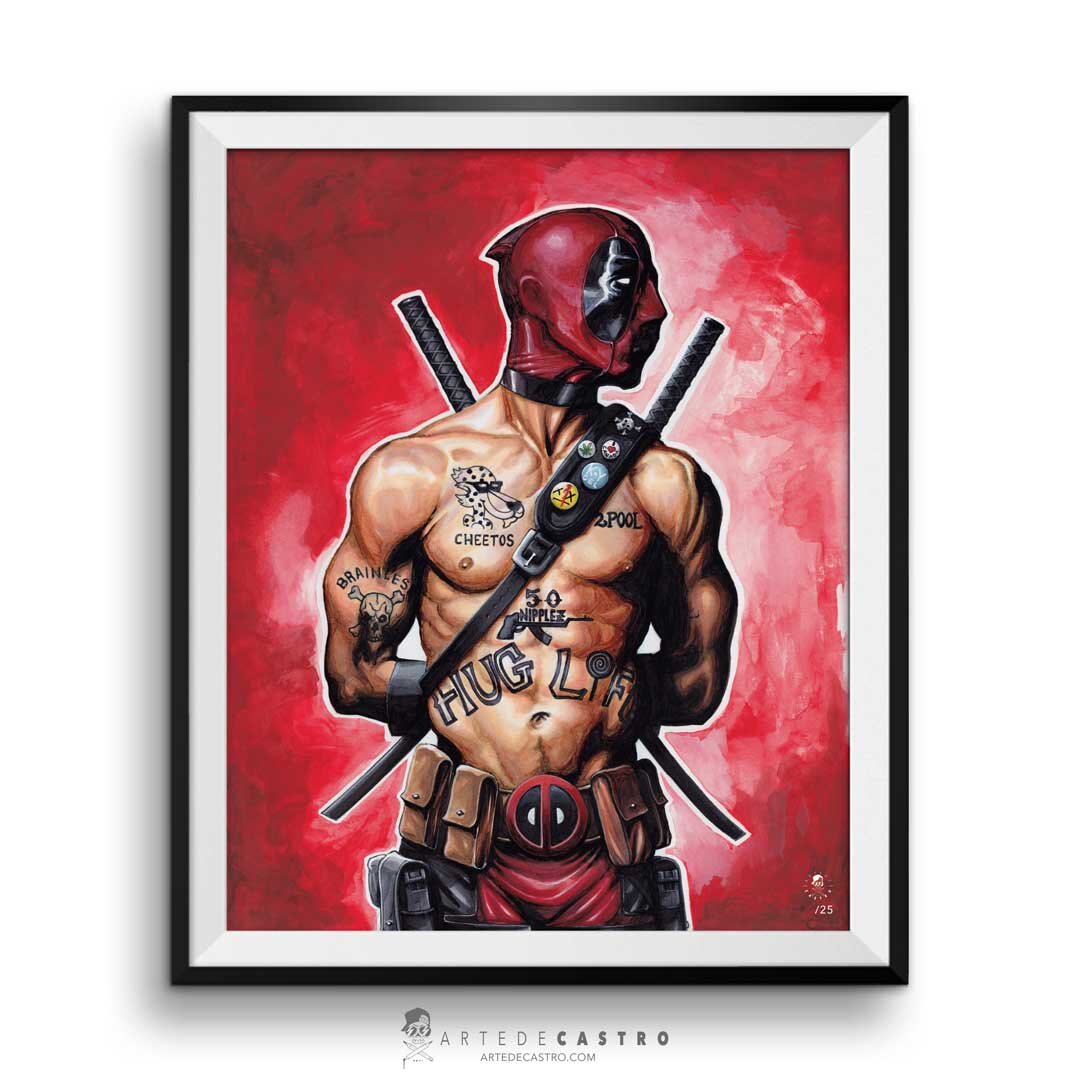

• 16x20 Poster
• Hand signed and numbered
(frame not included)
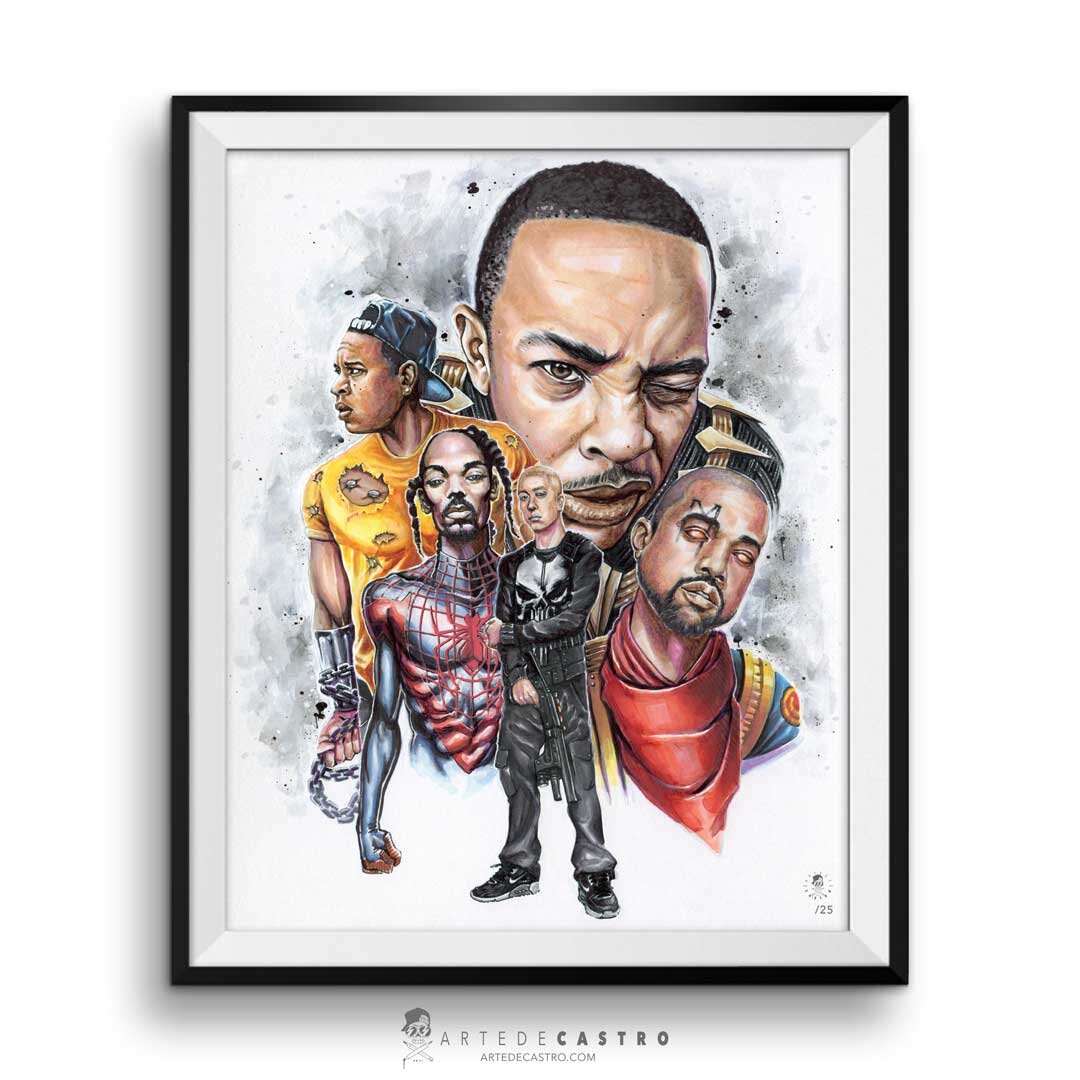
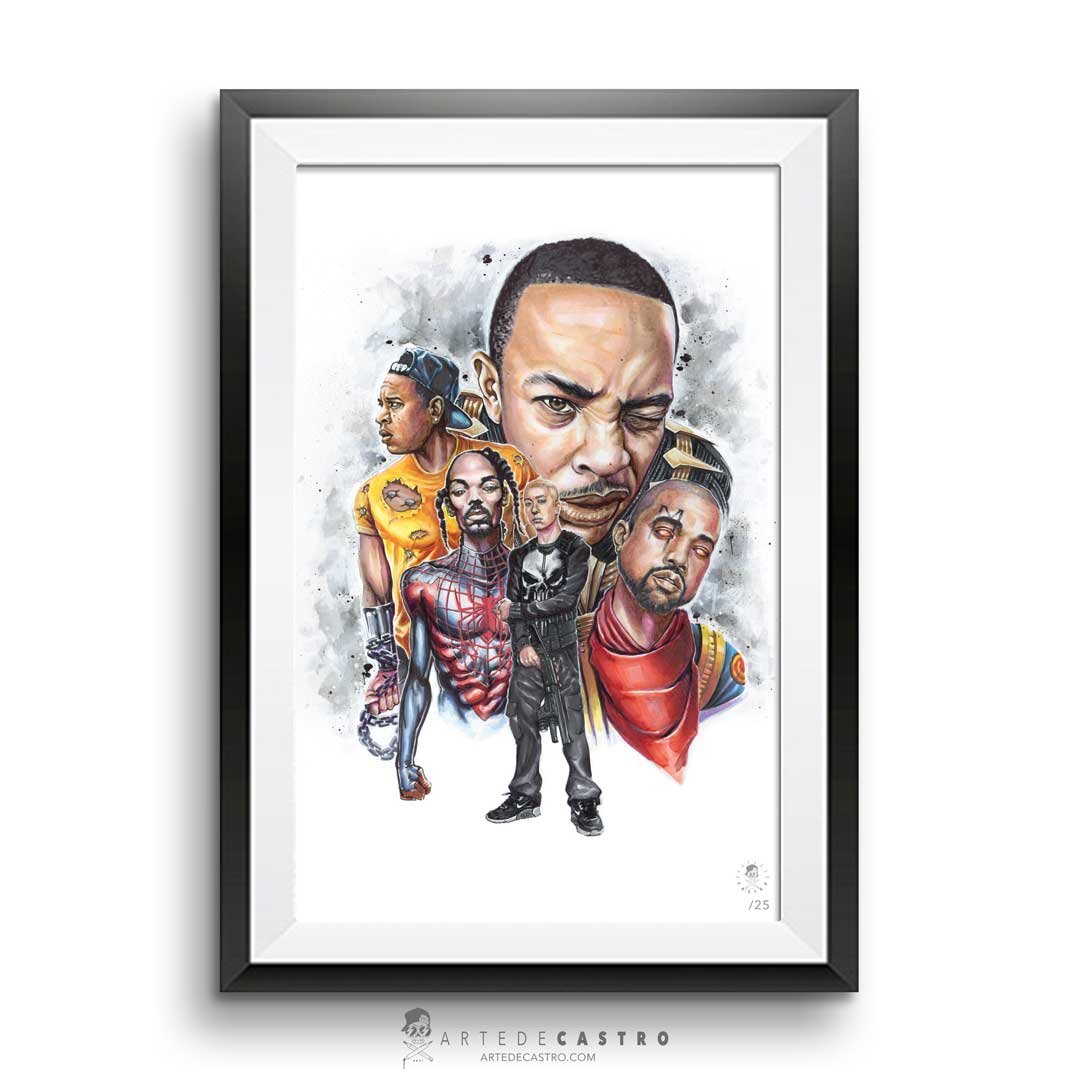

• 16x20 Poster
or
• 11x17 Poster
• Hand signed and numbered
(frame not included)
Like, comment and share!
Share with anyone who needs to shake off those sad robot poses. I look forward to hearing your thoughts and questions.
Your neighborhood marker slinger,
Ivan Castro